Review of Kobayashi Masaki’s “The Human Condition” Trilogy
Warning – some light spoilers here, proceed at your own risk
At times, living in the US, it’s easy to think that ‘doing the right thing’ is easy. Students at my high school volunteered at churches or tutoring centers, parents donated to Doctors Without Borders and local charities, and we felt we were doing our part. This is one of the greatest privileges of living in the developed world: the ability to live by one’s values with ease. Kobayashi Masaki’s “The Human Trilogy,” however, confronted me with questions I had never had to personally face due to my privileged upbringing: how much suffering, pain, and humiliation would I be willing to endure to defend my values?
This nearly 10-hour trilogy centers on the life of Kaji, a pacifist and socialist who struggles to maintain these values in 1940s Japan as he is forced to work as a supervisor of colonial labor in Japan-occupied Manchuria in Part 1, a soldier in the Imperial Army in Part 2, and then wandering the ravaged countryside as he evades Soviet forces and Chinese peasant armies in Part 3, killing and stealing to try to protect his life and those of his comrades. The trilogy is remarkable in the vision it shows for what humanity could be at its best: a morally upright man withstanding pain and humiliation, fighting against historical forces beyond his comprehension, to defend his belief in the dignity of all and the human imperative to try to help others. Kaji endures beatings, torture, and humiliation to try to help those around him, and often it amounts to nothing – people he risked his life to help often end up dying gruesome deaths, yet Kaji continues fighting his impossible battle for human dignity. It’s inspiring; no matter how beaten down someone is by cynicism and despair, this movie can reawaken some kind of feeling and moral strength as it shows an individual at his very best, when the rest of the world is at its worst.
The final part has a very different tone from the first two parts, and I think that was the part that most directly addressed what ‘the human condition’ actually is. Despite enduring tremendous suffering in the first two parts, Kaji retains some kind of optimism and a sense that he has the power to do good. However, the final 3 hours have a level of bleakness that wasn’t even present in the beatings and torture sessions that happend before. Japan is rapidly losing the war, Kaji’s entire unit has been annihilated, and he is now reduced to a kind of rural banditry in order to evade capture by Soviet forces or violent murder by Chinese peasant militias. Kaji witnesses the people around him descend into barbarism, as all the ideals of ‘Japanese national unity’ collapse and are replaced by Matsya Nyaya, the law of the bigger fish devouring the smaller fish in an anarchic world where ‘might is right’: Japanese soldiers raping young women relying on them for protection to get home, people refusing to share food with one another, each hoping to increase his own chances of survival, men killing their families so that they can avoid a much slower death by starvation in an endless jungle, and married women whose husbands have vanished into the war attempting to seduce teenage soldiers in an attempt to get ‘male protection’ in times of violence and uncertainty.
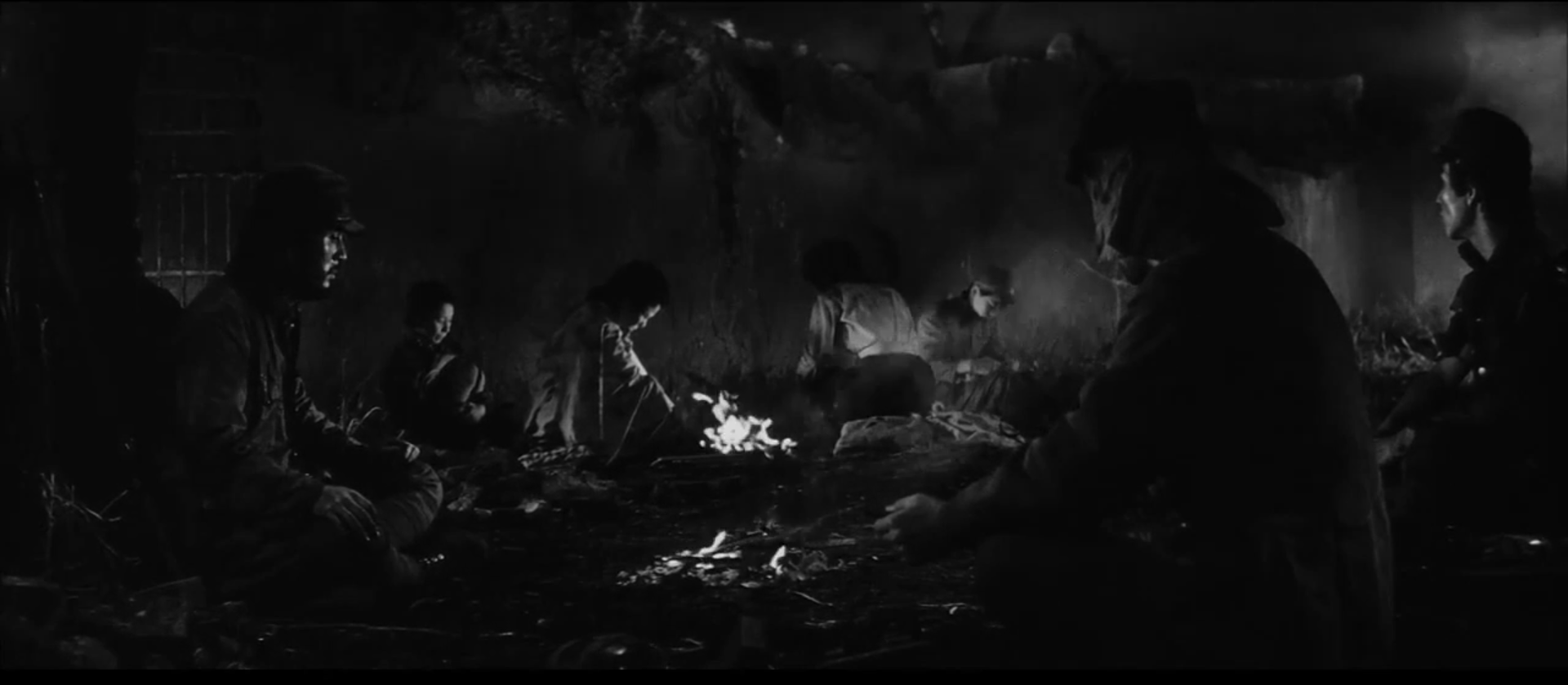
The hopelessness of the third part is increased by the collapse of all institutions in which people placed their trust. The Japanese imperial project has collapsed, leaving the nationalistic soldiers to confront the reality that they were fighting not for honor and glory, but for the violent subjugation of all of Asia to rape, pillage, and forced labor. Meanwhile Kaji, who had seen the Soviet Union as a paradise of equality and humanism, is cruelly disillusioned by the barbaric way in which the Soviets treat Japanese POWs, over-working them in forced labor camps where they are not given adequate food or medical attention and treated as anything but ‘equal.’ He also sees Soviet trucks periodically try to run over Japanese refugee women for fun, with women being thrown from the trucks after having been raped by the Red Army. Nobody is left with anything to believe in, and the film becomes much bleaker as Kaji is left completely alone with his humanism, as even the Soviet paradise is revealed to be a farce. So many good men hoped and believed that the Soviets would represent their ideals and become the first country to treat everyone fairly and respect human dignity, yet they were forced to realize that even this rare opportunity in human history was squandered as ideals were sacrificed at the altar of greed, megalomania, and ideology. This generational disillusionment was portrayed brilliantly by the movie, as Kaji stood in a Soviet kangaroo court, being sentenced to forced labor in Siberia for ‘sabotage’ that was nothing more than picking through scraps for extra food, while the smiling face of Stalin watches them from a poster.
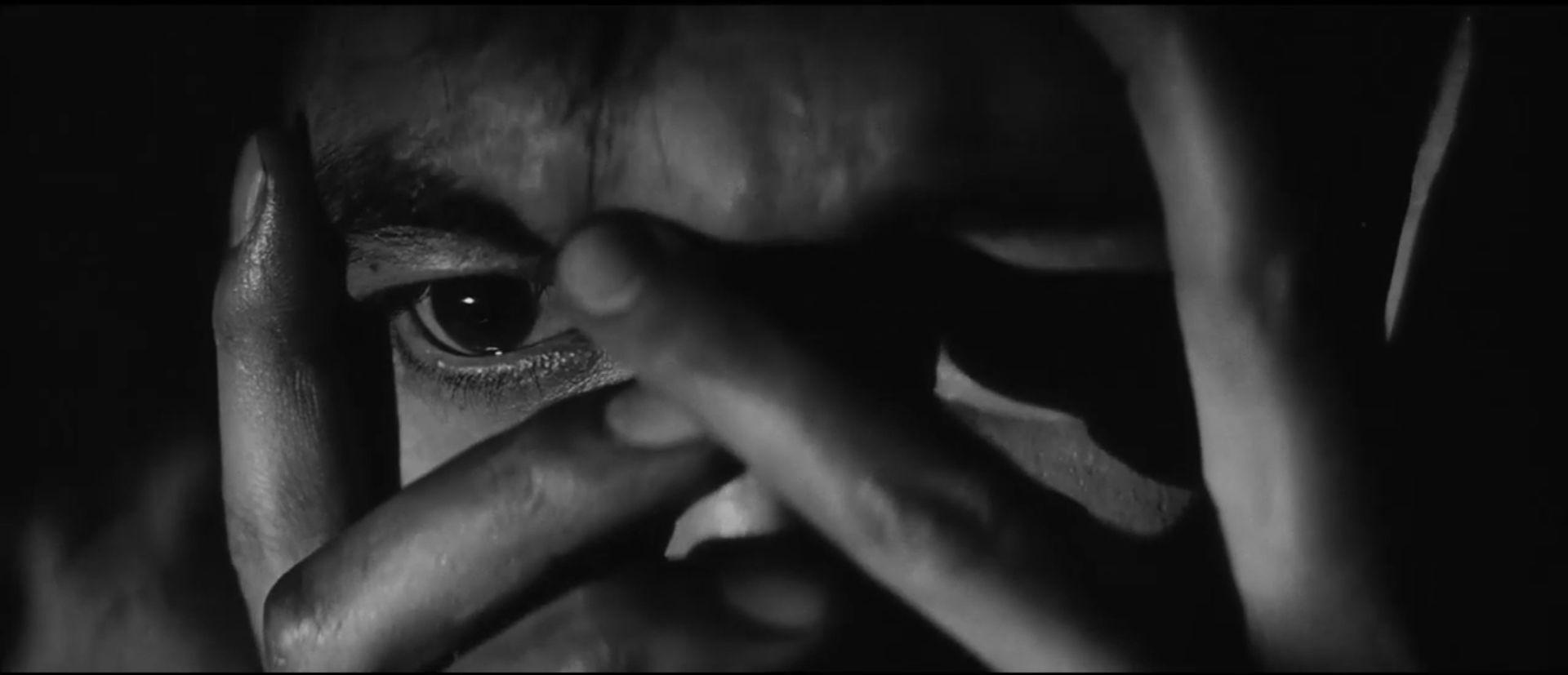
They can send us to Siberia and work us to death. But take down the “peace” and “liberation” signs. Listen to me. Exploit our labor and then try to reeducate us – that shouldn’t be the Soviet way. I’m not complaining about too much work. I can even understand the short rations. Their guards even sleep on the ground like us. What I’m saying… is that most POWs are not enemies in the class struggle. How they treat the men seems lacking in some ways, excessive in others.
Excessive in what way?
Maybe I’m wrong… but they seem smug and selfish to me.
That can’t be helped. The present stage calls for a Soviet-first policy.
Really? It can’t be helped? Is that the universal solution to human dilemmas: “It can’t be helped”?
The bleak, hopeless end of the film does not diminish the inspirational aspect, however. I think this is what Kobayashi was ultimately trying to say about the human condition: that we must continue fighting to help others and live by our values, even when it involves risking injury or death, even when it often amounts to nothing and we fail to save anybody. Kaji endured countless beatings and humiliations from soldiers senior to him in rank because he protected the soldiers he was training from the veterans’ tormenting, yet in the end, almost his entire unit was annihilated in battle with the Russians. Although this might look like a depiction of moral nihilism (‘nothing matters in the end’), it is quite the opposite – Kaji continues risking his own life to try helping others, because to a morally upright man, knowing that you did the right thing matters more than the things that happen outside your control.
Kaji’s character is inspiring, and it’s hard to imagine that people like him can possibly exist in our world. That is precisely the point – he is an idealization of what we could be at our best, something for us to aspire to. Despite the bleak ending of the film, I found this deeply inspiring. If you want to see movies that make you rethink what it even means to be human, I recommend seeing this trilogy.
Aside from the brilliance of the story (adapted from a novel by Junpei Gomikawa – I am in awe of the author) and the themes that it tackles, I was deeply impressed by the cinematography and how Kobayashi constructed each shot. This is black-and-white filmmaking at its finest – the dark colors in the third part make the bleakness come to life in a way that I doubt a color film would’ve been able to do. The camera angles and use of light perfectly depict this world completely devoid of hope and joy.
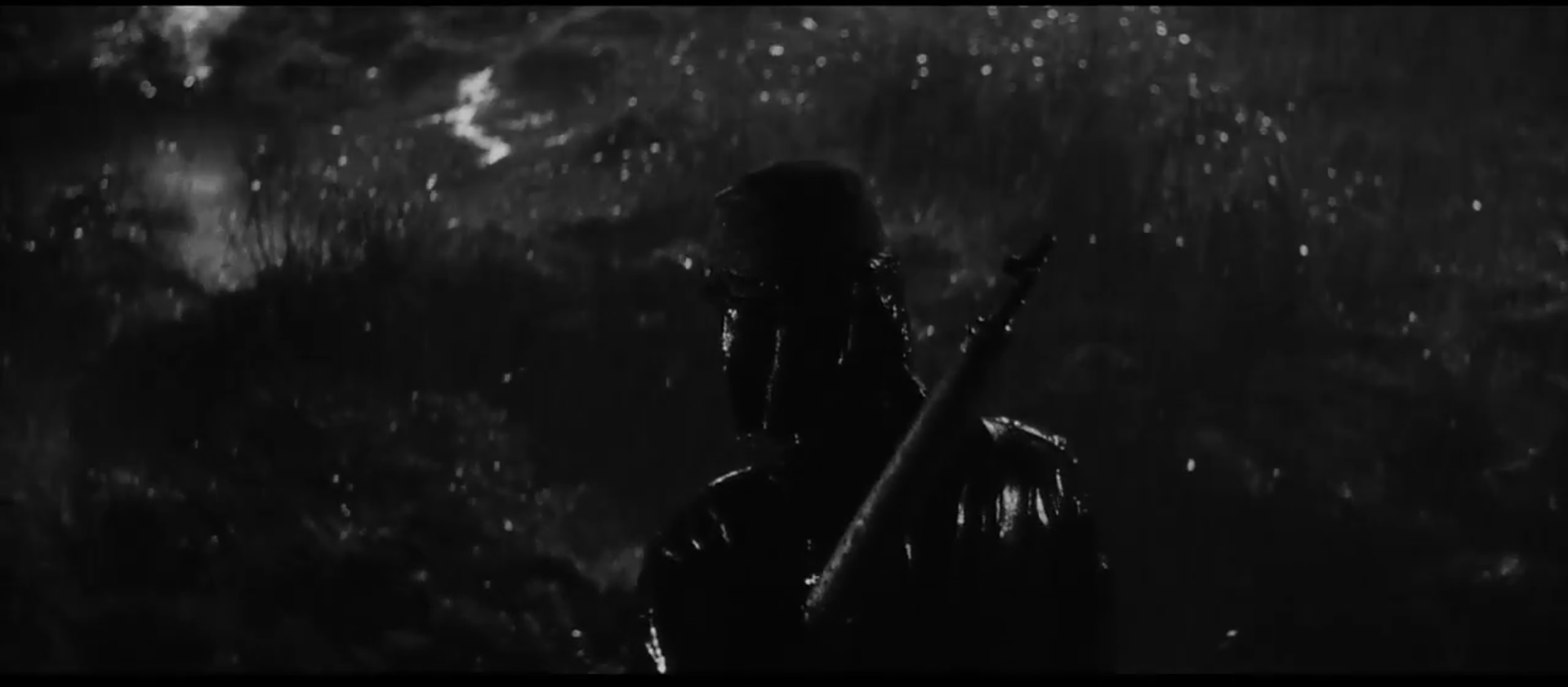
Parts 2 and 3 also have better-choreographed action scenes than many big-budget movies made nowadays. With the limited technology of the 1950s, Kobayashi somehow managed to film a realistic and immersive World War 2 battle complete with tanks, machine guns, and big explosions – that is impressive.
The immersive quality of the trilogy is maintained throughout, and you can really feel like you are there in that world of violence and cruelty (trust me, this is still praise). I enjoyed the gritty realism and dark colors, the breathtakingly beautiful shots of nature interspersed amidst this dystopia, the wide shots showing columns of forced laborers or soldiers marching through fields, and the moody shots of people lost in thoughts about their increasingly grim future. The film is visually beautiful.
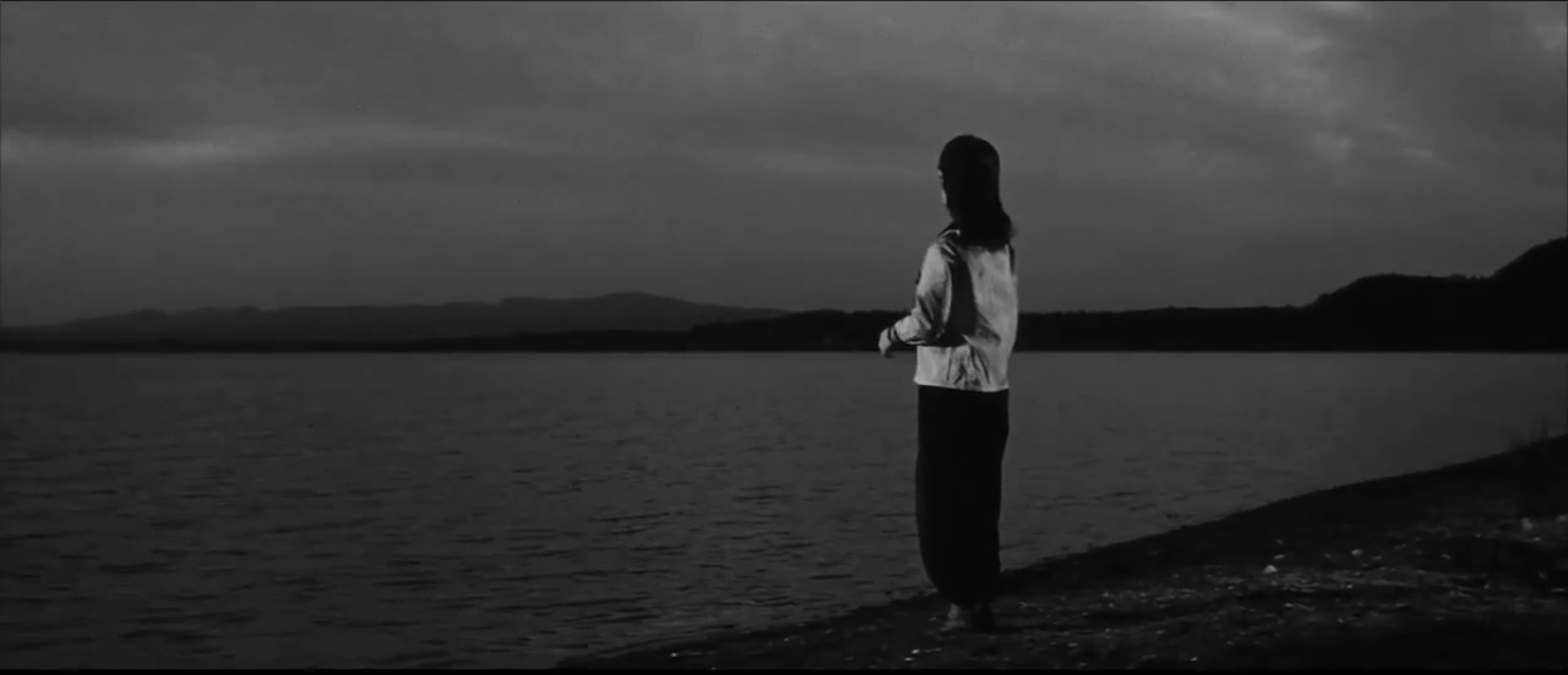
Overall, these 3 films taken together (it’s difficult to discuss them separately – the full impact really comes from seeing them as one cohesive story) are some of the best movies I’ve ever seen. It paints such a simultaneously inspiring yet tragic depiction of the human condition and so powerfully captures the things that make us human: fighting for our values, being anchored by love and friendships, having dreams and wanting to believe in something. I could go on talking about this film for hours, but that would require more significant spoilers and also a far longer post. If you have 10 hours to spare, even if it’s over the span of several weeks, I highly recommend “The Human Condition.” It’s a trilogy that will make you think for many years to come, show you moving scenes that make you despair for the scale of the tragedy (my eyes grew watery at several points), and be in awe of the power of filmmaking to capture the complexity of human life.